|
|
|
|
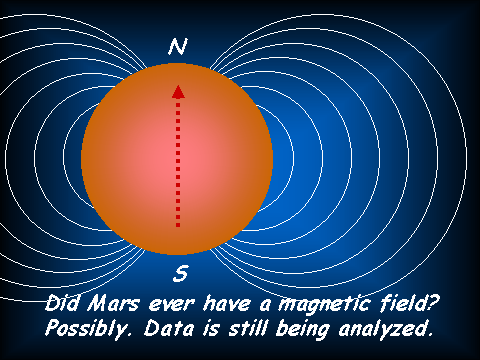


For mars to have once had life, as we understand life, not only would a warmer wetter climate would have been essential, but also a magnetic field to shield the surface from lethal particle radiation from the sun and the galaxy. Earth’s magnetic field captures and retains high energy particles in a complex system of radiation belts, thereby preventing them from ever reaching its surface. Evidence from the Mars Global Surveyor now strongly suggests that Mars did indeed have a magnetic field in its past, and even that processes akin to terrestrial continental drift and magnetic field reversals took place. It is therefore reasonable to conclude that the Martian climate was more earthlike in the remote Martian past than it is today, and for a fairly long period of time. What happened to make Mars diverge from Earth in the course of its development over the intervening aeons is uncertain.
Slide 17 of 22