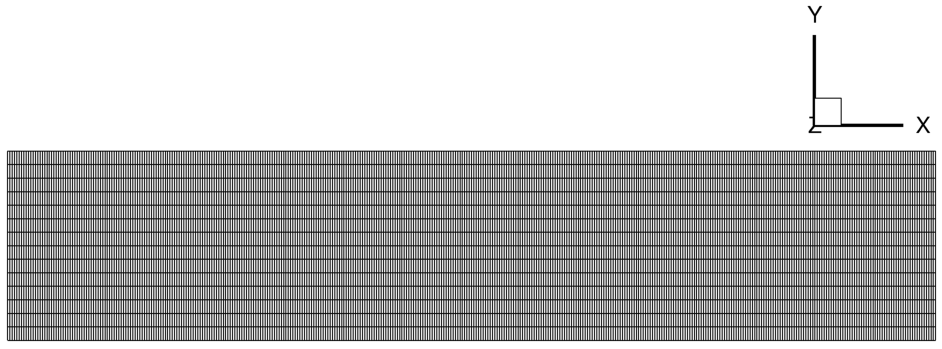
Figure 1: Schematic of Structured Mesh.
This study focuses on a finite-rate, hydrogen-oxygen chemical reaction occuring within a constant-area channel. The ignition point and species mass fraction values of the combustion products are investigated. The Wind-US (version 4.107) results, structured and unstructured algorithms, are compared to analytical calculation presented by Mani et al. (Ref. 1).
A 201 x 15 single-zone two-dimensional structured mesh was generated to model the channel region from 0 to 5 inches downstream. The channel is 5 inches long and 1 inch tall. Mani et al. indicated that 201 points, uniformly spaced in x and y directions, was adequate to predict the correct ignition point, based on a closed-form solution using rate equations. However, a grid resolution study showed that a finer mesh (Figure 1), 401 x 15 grid points, uniformly spaced in x and y directions, was necessary to obtain a grid converged solution. This finer mesh was split into 10 zones, in x-direction, to accelerate convergence using MPI. Although the mesh was split using a commercial grid generation tool, cfsplit tool provided with Wind-US can also be used to do the same.
Figure 1: Schematic of Structured Mesh.
An unstructured mesh was also generated with the same physical dimensions (Figure 2). The unstructured two-dimensional mesh was extruded one unit in z-direction as the unstructured algorithm is three-dimensional, and requires a unit length in z-direction for two-dimensional problems. The unstructured mesh was split into 11 zones to accelerate convergence. The cfpart tool was used with the input file (run.cfpart.inp) to split the unstructured mesh. The input to the cfpart tool was the grid exported from a commercial grid generation tool. The output is the final grid, listed in the table below.
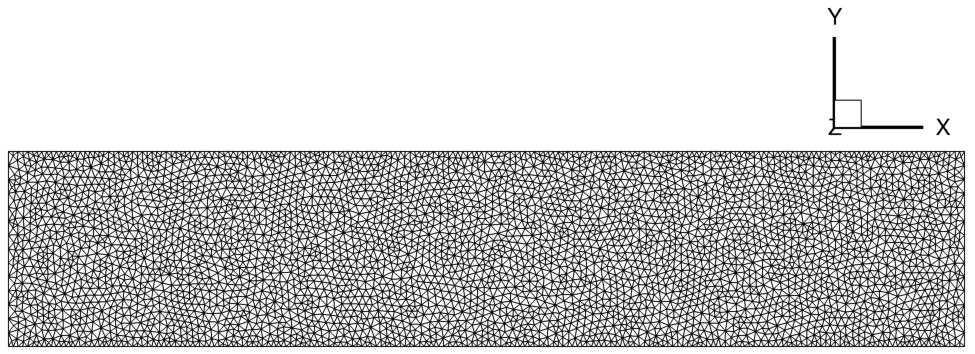
Figure 2: Schematic of Unstructured Mesh.
Both grids are provided below in the common file format. The coordinates in both files are in units of inches.
| Structured | Unstructured |
|---|---|
| run.cgd | run.cgd |
The initial (freestream) conditions were set to static conditions of 2500 Rankine, a pressure of 14.7 psi, and Mach number 1.82. In addition, species mass fractions were set to 0.99310 for oxygen and 0.00689 for hydrogen (all others set to zero). It is noted that the sum of the individual species mass fractions do not equal to 1.0 for the results provided below. However, it is recommended that the sum of individual mass fraction should equal to 1.0. Although, in this case no error was observed, Wind-US will generally issue an error and exit if the sum of individual mass fractions do not fall within a certain tolerance of 1.0. Consequently, the input files provided on this page has been modified to increase oxygen mass fraction to 0.99311. No significant change in the results is expected due to this modification.
In this case, the chemistry file h2-air-7sp-mbody-3287.chm was used for the finite-rate calculations, as it provided seven species and reactions used by Mani et al. in their analytical solutions. The model is included in the Wind-US version 4.0 release package. The flow in this case was considered laminar.
The frozen boundary condition (BC) was used for the inflow and the outflow boundary condition was used at the exit (forcing extrapolation of the pressure). To compare the results to the analytical solution, which did not account for wall effects, inviscid wall BC was employed for the upper and lower walls.
The computations were performed using the time-marching capabilities of Wind-US to march to a steady-state (time asymptotic) solution. Local time stepping as used at each iteration. The time-marching was performed until the convergence criteria was achieved, which was a combination of Navier-Stokes L2 Norm and species mass fraction along the centerline. Both solutions were obtained for a fixed 10,000 cycles at CFL number of 1.0.
Both input files are provided below.
| Structured | Unstructured |
|---|---|
| run.dat | run.dat |
The Wind-US structured and unstructured flow solvers are run, which created the following output files:
| Structured | Unstructured |
|---|---|
| run.cfl | run.cfl |
| run.lis | run.lis |
The log of the L2 Norm was observed for convergence. The charts are omitted here but can be produced using the mon_res script. The script should be executed in the folder with the run.lis file.
Species mass fractions for H2O, H2, and O2 is compared to the analytical solution obtained by Mani et al. (using a Runge-Kutta scheme) in Figure 3. The red curves represent the unstructured solution and the blue curves represent the structured 401 x 15 mesh solution. The two Wind-US solutions and the analytical solution compare well with each other.
The analytical solutions can be downloaded here. The structured solution was post processed using post_process. The mass fraction profiles for the unstructured solution was extracted by importing solution and grid files into Tecplot using the Wind-US plugin.
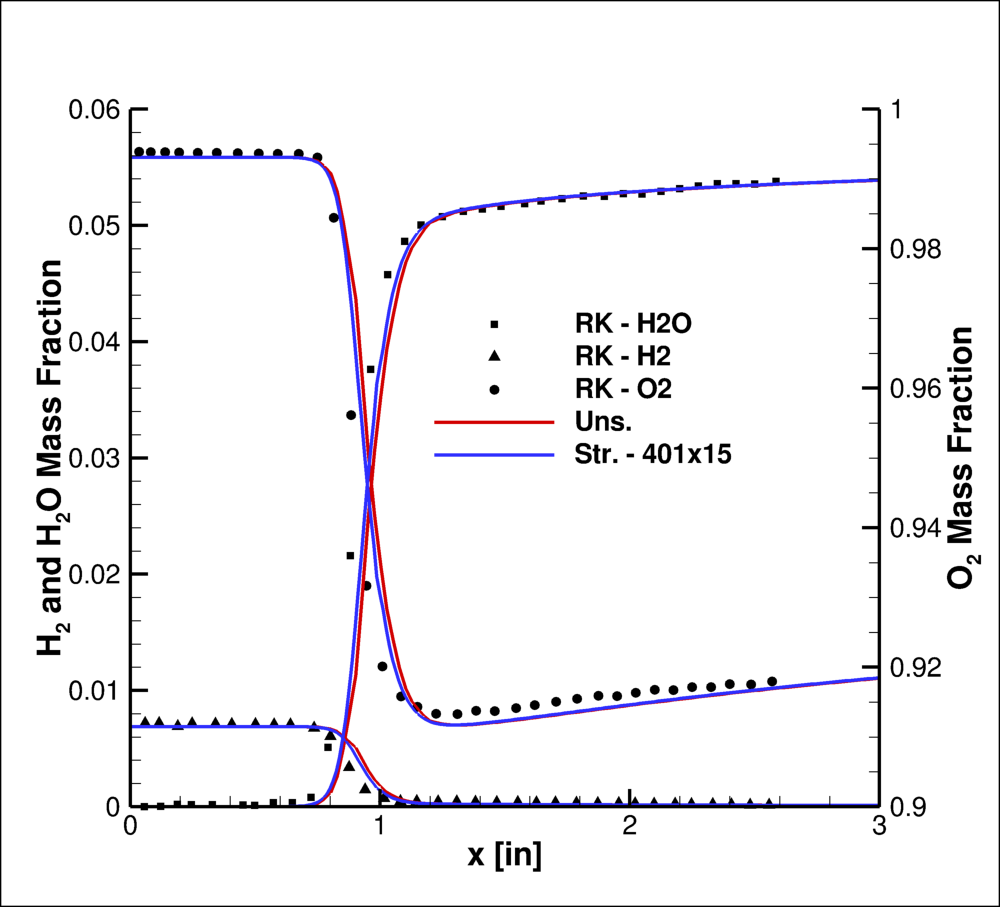
Figure 3: H2O, H2, and O2 mass fractions at the duct centerline
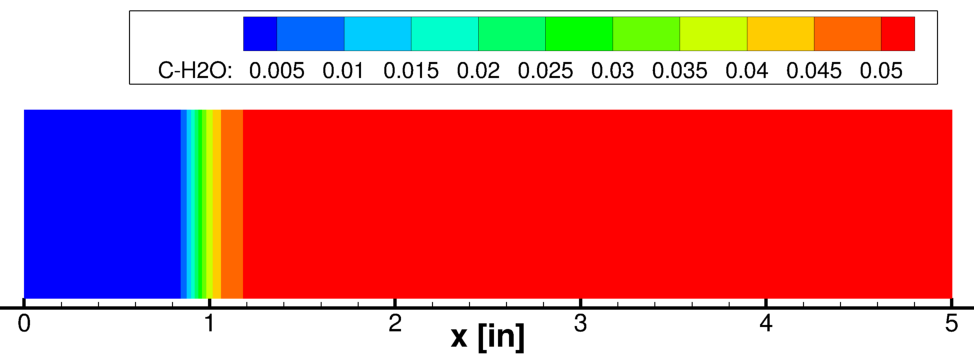
Figure 4: H2O mass fractions contours in the x-y plane for structured grid.
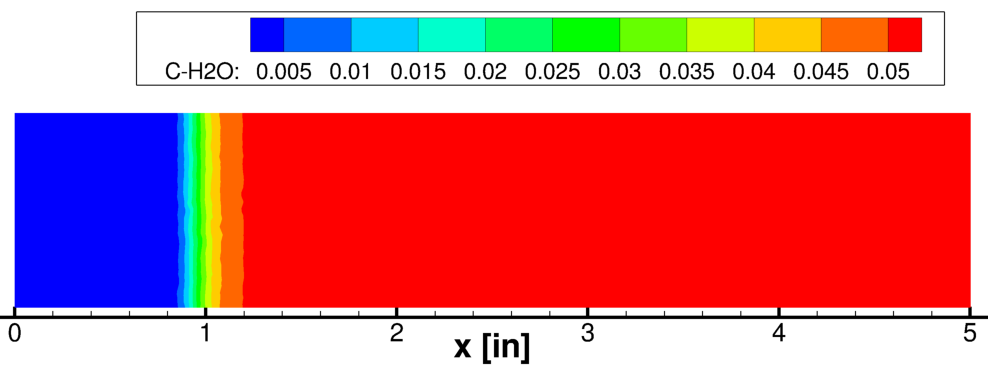
Figure 5: H2O mass fractions contours in the x-y plane for unstructured grid.
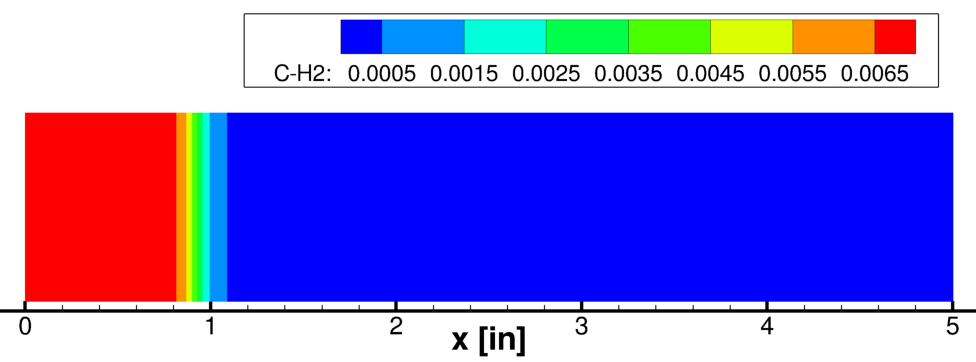
Figure 6: H2 mass fractions contours in the x-y plane for structured grid.
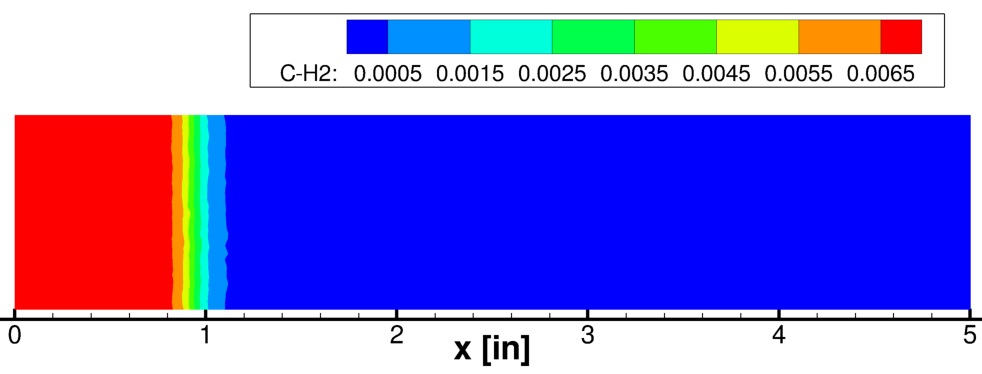
Figure 7: H2 mass fractions contours in the x-y plane for unstructured grid.
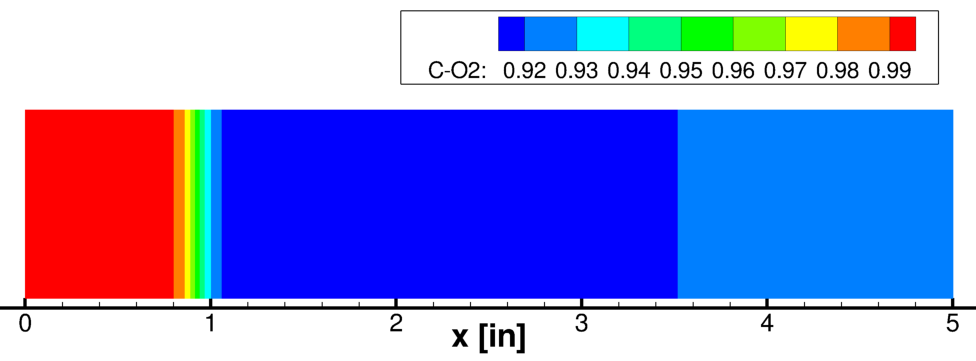
Figure 8: O2 mass fractions contours in the x-y plane for structured grid.
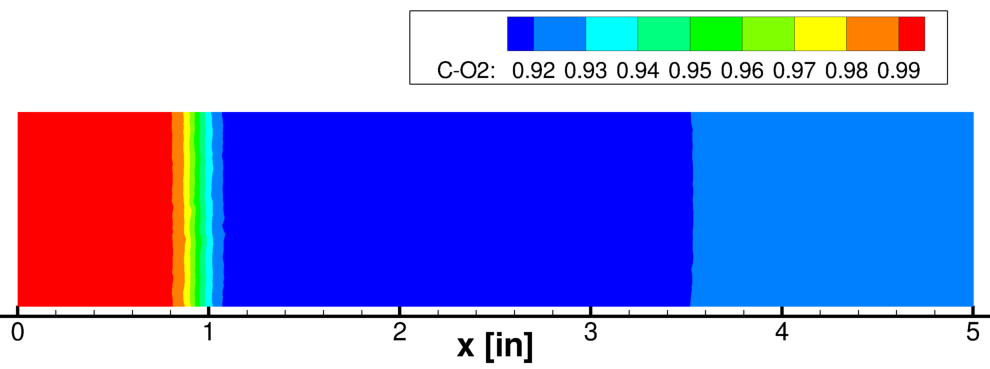
Figure 9: O2 mass fractions contours in the x-y plane for unstructured grid.
Mani, M., Bush, R.H., Vogel, P.G., "Implicit Equilibrium and Finite-Rate Chemistry Models For High Speed Flow Applications," AIAA Paper 91-3299-CP, Jan. 1991.
This case was created on December 28 , 2014 by Manan Vyas, who may be contacted at
NASA Glenn Research Center
21000 Brookpark Road, MS 5-12
Cleveland, Ohio 44135
Phone: (216) 433-6053
e-mail: manan.vyas@nasa.gov